Organisation Hierarchy and Access Rights
Organisation Hierarchy
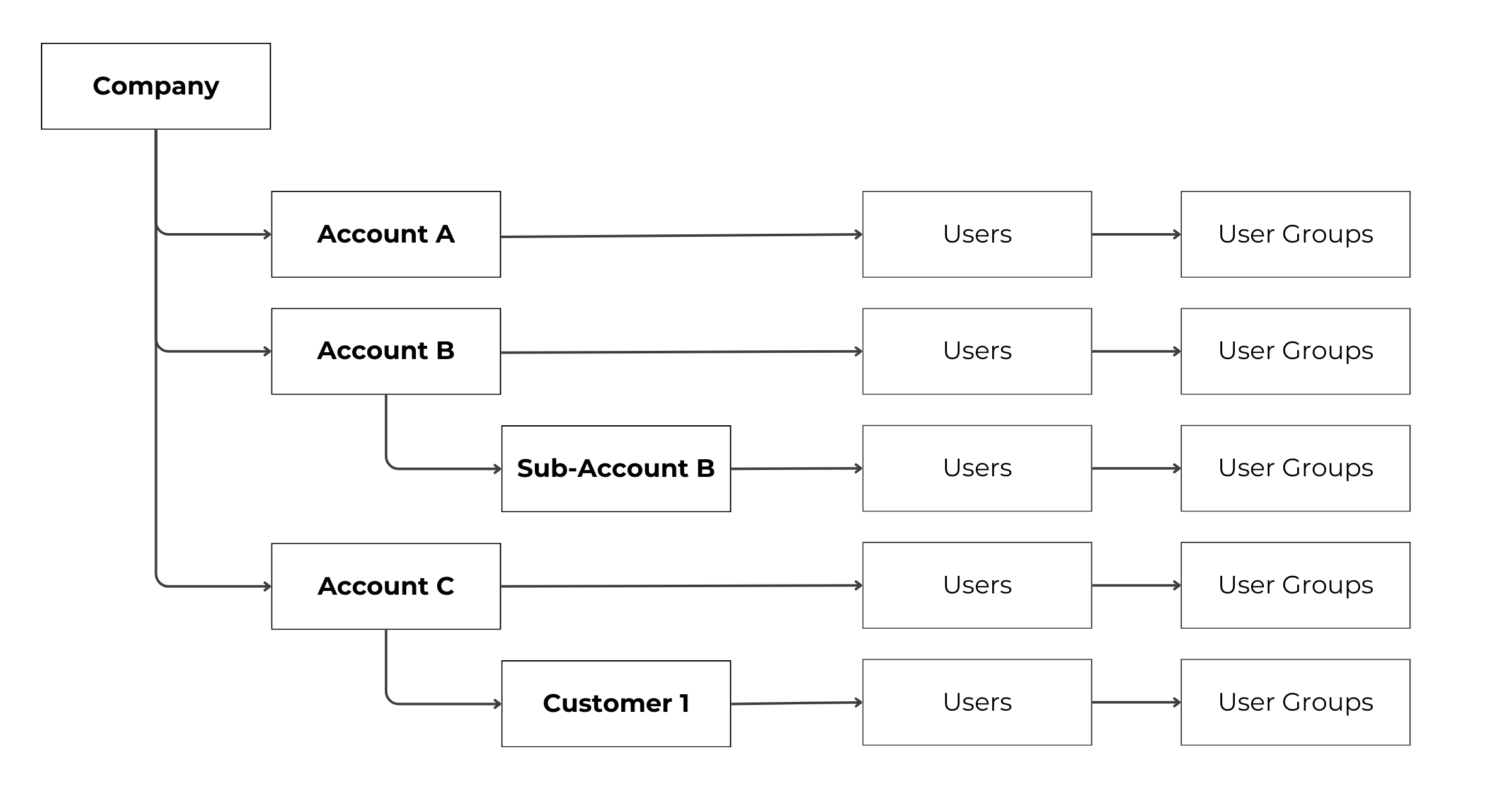
The CMP system allows an organization to structure its CMP entity as a hierarchy, which places individual Users into Groups that represent the organization's various constituents and segmentations. In many cases, these correspond to a customer, a branch, or a sales partner.
The following diagram displays an overview of an organization hierarchy in the CMP and the different levels a User can exist within the organizational hierarchy.
Access Rights
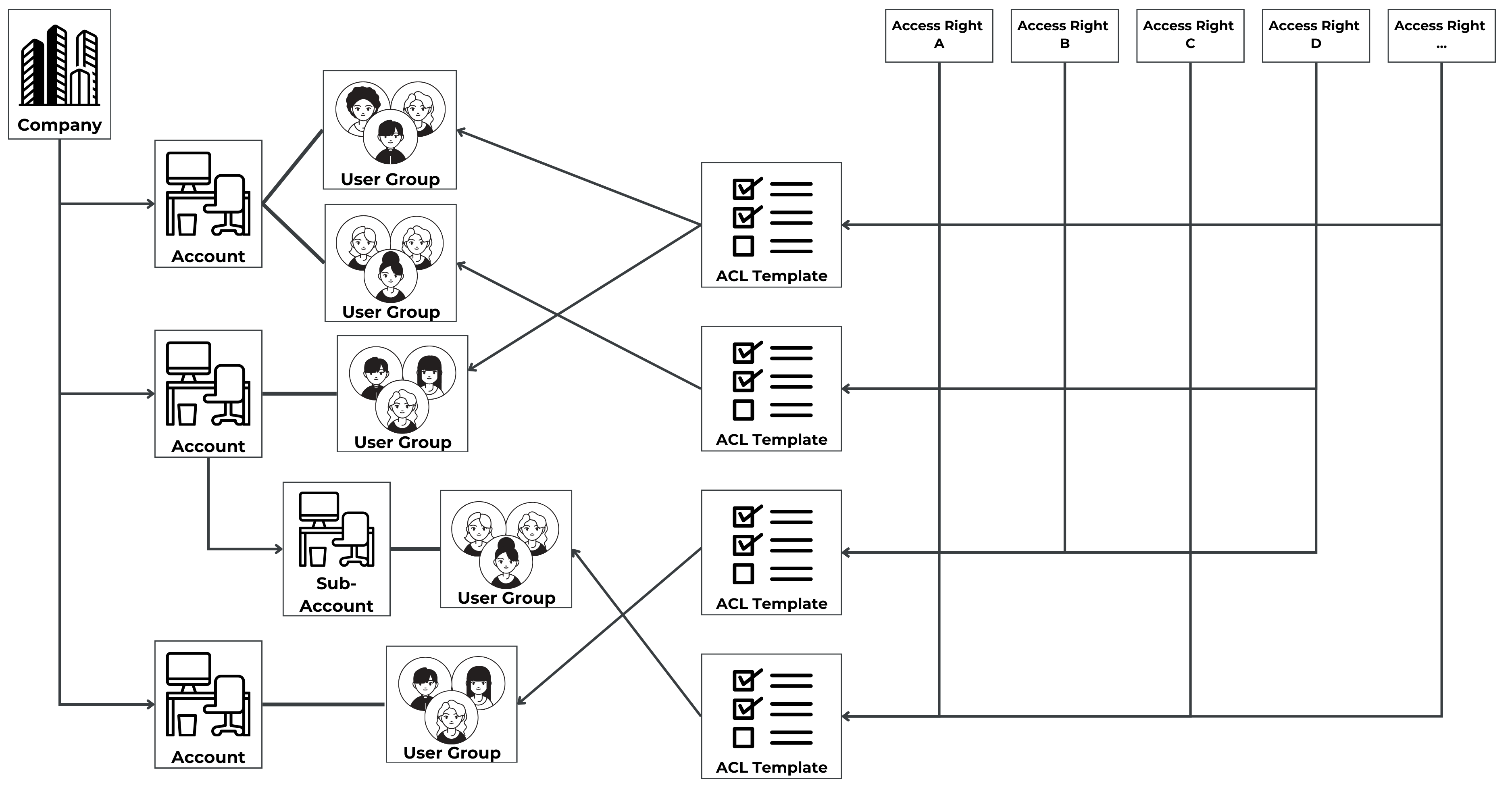
An Access Control List (ACL) is a list of permissions attached to an object. The ACL specifies which users or system processes are granted access to the objects, as well as what operations are allowed on a given object.
Note that, although an ACL (Access Control List) literally defines a list of Access Rights, in the context of CMP it is used both for a list of rights and one single right in the ACL.
For each CMP module there is a predefined list of Access Rights that allow specifying functional rights for CMP Users.
Access Rights can be grouped into ACL Templates, i.e., predefined lists of ACLs, that are assigned to User Groups rather than individual Users. User Groups on different levels in the organization hierarchy can have different sets of Users and Access Rights assigned.